
How return ship programmes turn maternity return into lasting career growth
Explore what makes return ships work—for mothers, organisations, and the future of leadership

Explore how thoughtfully designed return ship programmes do more than ease mothers back into employment—they reshape organisational culture, strengthen leadership pipelines, and deliver measurable impact for all. From practical supports like childcare and flexible schedules to mentoring and skill refreshers, discover the elements that make re-entry not just possible, but empowering.
📌In a nutshell:
Return ship programmes turn maternity return into a career boost—for mothers and the organisations that invest in them.
What you will learn from this article:
Discover why structured return ship programmes transform not just careers, but organisations
Learn which practical supports make a mother’s return to work smoother and more successful
Understand how mentoring, skill refreshers, and flexible arrangements change outcomes
See the measurable benefits for both employees and companies when return ships are done right
Explore how these programmes can shape long-term career growth and workplace diversity
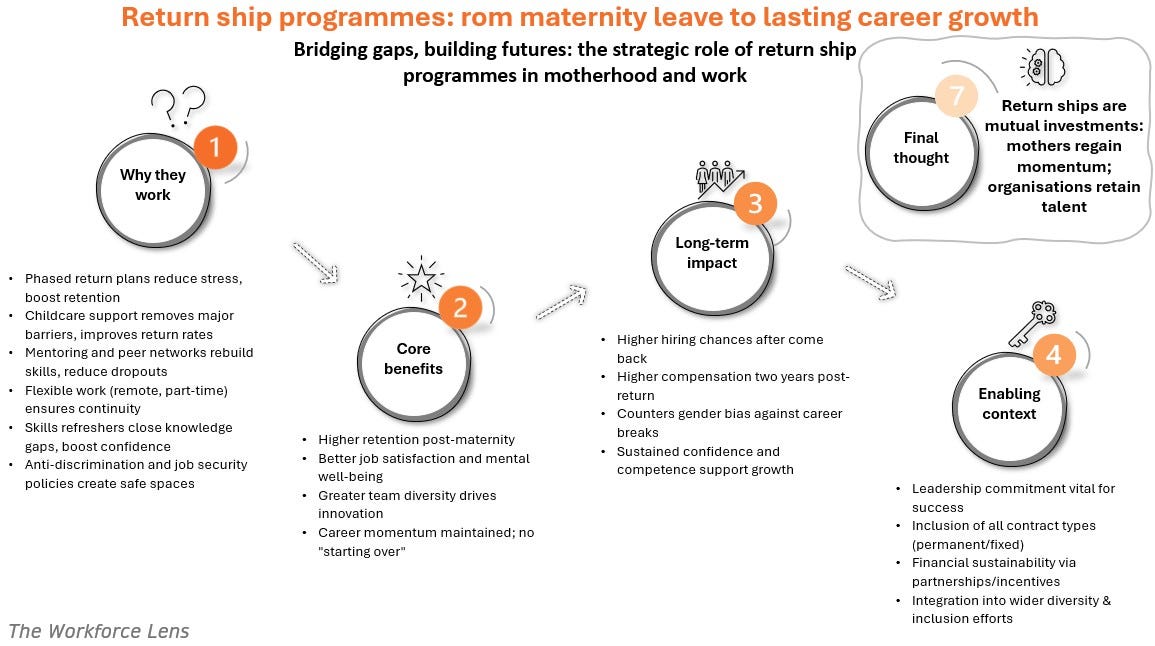
Table of contents:
What effective programmes include: from structure to support
The impact: retention, well-being, and performance gains
Long-term effects on careers and organisational culture
Policy and organisational context that enables success
Key takeaways
Final thoughts: building workplaces where return is growth
Next on the Workforce Lens
Further reading
What effective programmes include: from structure to support
Return ship programmes are structured pathways for mothers returning to the workforce, combining tailored onboarding, phased re-entry, mentoring, skills refreshers, and practical support to ensure successful reintegration. Evidence shows that the way a return is managed matters as much as the opportunity itself. Research consistently highlights that structured return plans, coaching, and flexible arrangements significantly improve retention, job satisfaction, and career continuity (Franzoi et al., 2024; Cambridge Journal of Public Policy; Leeds University, 2023).
Key principles and evidence-based practices:
Phased re-entry and tailored plans: Personalised return plans with clear goals and a gradual increase in hours reduce stress, support adaptation, and enhance both retention and job satisfaction. About half of OECD countries allow part-time, phased returns after parental leave, improving labour market participation and job fit
Childcare support: Offering subsidised or on-site childcare removes a major barrier. Organisations providing this support see 30–40% higher return and retention rates (Leeds University, 2023)
Mentoring and peer networks: Structured mentoring programmes reduce drop-out rates, provide professional and psychological guidance, and help mothers regain confidence and reconnect with their roles (Emerald, 2024).
Flexible working arrangements: Remote work, reduced hours, and flexible schedules strongly correlate with sustained career continuity and reduced risk of workforce exit (OECD & EIGE, 2020)
Skills refreshers: Updating both technical and soft skills to align with current job requirements strongly predicts reintegration success, confidence, and career progress (ScienceDirect, 2024)
Organisational policies: Robust policies around job security and anti-discrimination are essential for creating a safe, supportive environment for returning mothers (ILO & UK Government, 2024)
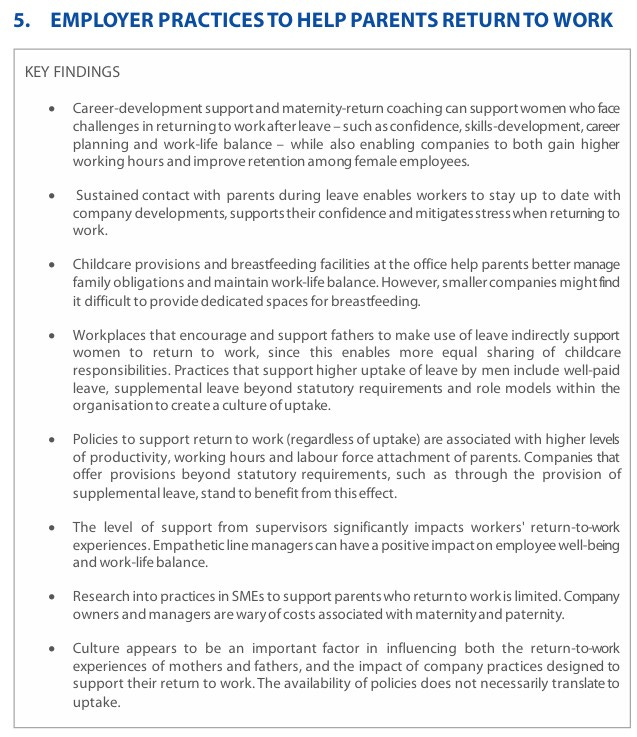
Duration and eligibility: Programmes typically run three to twelve months with phased or part-time options, and are open to all mothers returning from maternity or shared parental leave (Daphne Jackson Trust; ARUP Laboratories; Northspan Toolkit)
“Flexible work arrangements—including remote work, reduced hours, and adaptable schedules—are highly correlated with successful labour market re-entry and greater employment continuity, particularly for mothers.”
Return to the labour market after parental leave: A gender analysis, EIGE
Strategic rationale: Return ships are not charity — they are mutual investment. Mothers regain confidence and skills, while organisations sustain talent, diversity, and long-term performance. The point is not to help women return; it is to make sure they never have to start over.
The impact: retention, well-being, and performance gains
Returning to work after maternity leave is more than just showing up for a job; it is a crucial moment that affects careers, well-being, and the wider organisation. When these programmes are done well, their impact is clear and measurable — for mothers, for companies, and for the workforce as a whole.
Higher retention: Companies implementing these best practices report 30–40% higher retention of mother’s post-leave, mitigating talent loss. Leeds University research highlights how structured support and practical interventions directly contribute to workforce continuity
Enhanced well-being: Return ship programmes improve job satisfaction and reduce work-family conflict, translating into better mental and physical health among returning mothers. Franzoi et al.’s systematic review (2024) shows these outcomes foster workforce stability by helping mothers manage the pressures of re-entry effectively
Stronger diversity and innovation: Successful return ship programmes enhance organisational diversity and inclusion, promoting innovation and profitability. Evidence from Emerald demonstrates that companies investing in structured return ship initiatives build more dynamic and resilient teams
Career continuity and confidence: Return ship programmes contribute positively to women’s career trajectories by reducing skills atrophy and enhancing reintegration confidence. ScienceDirect research (2024) shows that tailored skills refreshers and
“Organisations that invested in structured return ship programmes showed greater team diversity, increased innovation outputs, and higher performance ratings over time.”
Returning to work after maternity leave: a systematic literature review, PMC
Imagine a workforce where returning parents never feel like they are starting over — and organisations never lose the talent they’ve nurtured.
💡 Related read:
Retention strategies for real workplaces: coping with unmet employee demands
Explore practical retention strategies that address employee needs beyond pay—focusing on career growth, supportive management, and work-life balance to build loyal, motivated teams in today’s evolving workplaces.
Long-term effects on careers and organisational culture
The impact of return ship programmes extends far beyond the immediate return to work. A 2024 study by Julia L. Melin in Social Psychology Quarterly provides one of the most comprehensive, data-driven looks at long-term career outcomes for mothers. The study analysed 1,461 job applicants who had taken career breaks, comparing those who participated in return ship programmes with those who did not.
Higher interview and hire likelihoods: Mothers in return ship programmes had a 35% higher chance of interview invitations and a 22% higher chance of being hired than non-participants. They also received higher competence and commitment ratings from evaluators, persisting for at least two years after re-entry
Financial gains: Return ship participants earned, on average, US$4,963 more in total recommended compensation at two years post-return, including higher salaries and bonuses linked to perceived competence
Gendered career impact: Mothers benefit disproportionately compared to fathers, helping to narrow biases that often hinder career continuity
Mechanism of impact: Statistical mediation analysis shows that higher perceived professional competence and commitment fully explain the long-term positive effect of return ship participation
Sustainable career benefits: These programmes provide lasting advantages in pay, professional perception, and hiring opportunities, setting the stage for long-term career growth
“The long-term career advantage of return ship programmes was notably greater for mothers compared to fathers, effectively offsetting common biases against career break women.”
Return ships are not a temporary fix; they are a blueprint for sustained career advancement.
Policy and organisational context that enables success
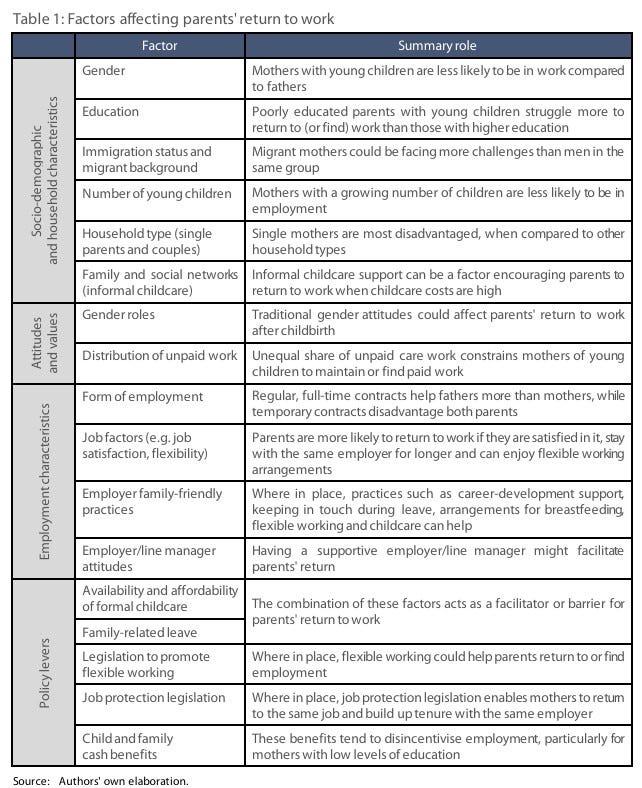
Return ship programmes operate within organisational and policy frameworks that shape their effectiveness. In research-intensive UK universities, the odds of returning after maternity leave are 59% lower for those on fixed-term compared to permanent contracts, underlining the need for robust policies for all contract types.
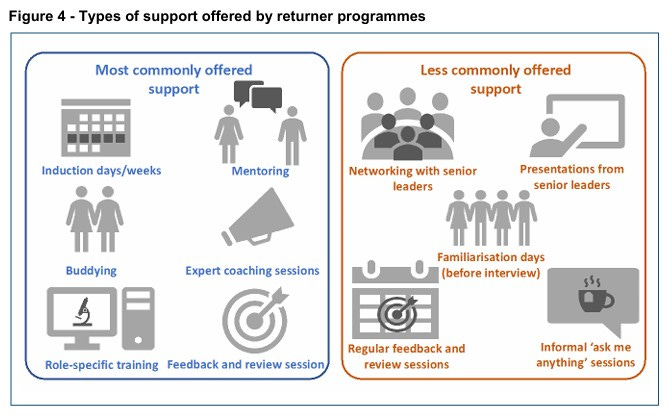
The UK Government’s 2022 report on Employer Research on Returner Programmes surveyed multiple sectors and firm sizes, confirming that return ship initiatives build committed, diverse talent pools that strengthen workforce stability and productivity. Employers report greater loyalty and improved morale when formal support — coaching, mentoring, and flexible arrangements — is available.
Financial sustainability remains a challenge, especially for smaller firms that may struggle to provide subsidised childcare and dedicated staff time. The report recommends public-private partnerships and government incentives to help smaller organisations sustain effective programmes. It also stresses that integrating return ship initiatives into broader diversity and inclusion strategies maximises organisational impact and helps returnees advance beyond entry levels.
The lesson is pretty clear: return ship success requires alignment between organisational commitment, practical support, and policy frameworks — without these, even the best-designed programmes cannot reach their full potential.
Key takeaways:
Structured onboarding, phased re-entry, and personalised plans significantly improve retention and confidence
Childcare support is a decisive factor in successful workforce re-entry
Mentoring and peer networks accelerate skills reacquisition and reduce drop-out risk
Flexible work arrangements correlate with sustained career continuity and well-being
Skills refreshers—technical and soft—are essential to close gaps and boost competence
Strong policies around job security and anti-discrimination underpin programme success
Return ships benefit organisations as much as employees, supporting diversity, innovation, and long-term performance
Final thoughts:
Return ship programmes reveal a simple truth: careers do not stop because life changes, and the right support makes all the difference. When organisations offer real guidance, practical help, and understanding, people regain confidence, skills, and a sense of belonging. Returning parents can continue their careers with momentum, bringing fresh perspectives, renewed focus, and resilience shaped by life outside work. In these environments, trust, opportunity, and growth naturally go hand in hand, fostering teams that are stronger, more empathetic, and more innovative. The ripple effects extend beyond individual careers—collaboration improves, leadership pipelines broaden, and organisational culture deepens. If workplaces made this kind of support the standard, what might people bring back with them beyond the work on their desks?
Next on The Workforce Lens:
We are in a moment where organisations talk endlessly about strategy, transformation, and future readiness, yet many still struggle to answer a simple question: do we actually have the skills to deliver any of it? Technology accelerates expectations, priorities shift faster than job titles can catch up, and people are expected to adapt without ever being shown what “good” really looks like. Skill building becomes a race run in the dark. So, what happens when leaders expect outcomes that teams are not equipped to produce? How long can companies rely on instinct instead of evidence, or on generic training instead of real capability? At some point the gap between what is planned and what is possibly becomes impossible to ignore. This article looks at what it takes to close that gap on purpose: clarity, structure, ownership, and the discipline to treat skills not as an HR activity but as the engine that drives results. The question now is whether organisations are ready to build capability with intention — or whether they will keep hoping that people can somehow keep up on their own.
Further reading:
For transforming HR in the age of AI, “Rethinking HR for the AI era: practical strategies to build skills, trust, and resilience“ explains how blending AI with human-centric skills unlocks workforce potential and builds resilient, trusted organizational cultures
To boost engagement and retention across all ages, discover how generational diversity shapes culture and motivation in “Generational diversity in the workplace: key HR strategies to improve engagement and retention”
For ensuring long-term organizational strength, “Building business resilience: why Strategic Workforce Planning is your crisis insurance“ highlights how anticipating talent needs and aligning skills development prepares businesses for uncertainty
Readers favourites:
Remote Work Laws You Cannot Ignore: A Global Guide to Compliance
Remote Work in Transition: Benefits, Challenges, and Employee Preferences
How AI is reshaping entry-level careers: risks, skills, and strategies

References
After Parental Leave: Incentives for Parents with Young Children to Return to the Labour Market
Returning to work after maternity leave: a systematic literature review - PMC
Women and Parents in the Labor Market – Israel and the OECD | מרכז טאוב : מרכז טאוב
Return to the labour market after parental leave: A gender analysis
Analysis of responses to the call for evidence on returning to work after time out for caring
Bargaining over Maternity Pay: Evidence from UK Universities